Crossing Morocco by campervan allows you to discover the country at a very different pace than a classic tour. The Atlantic coast, Atlas villages, palm groves, southern valleys, and the gateway to the Sahara can be linked without changing accommodation at each stop.
Morocco has also become a popular winter destination for many European motorhome enthusiasts. Some come for a few weeks, while others spend a large part of the winter between the Atlantic coast, the Souss region, and southern Morocco.
The trip remains relatively simple to organize, but several points specific to the motorhome need to be anticipated: ferry, temporary admission of the vehicle, insurance, overnight parking, water supply, waste disposal, electricity and vehicle dimensions .
Why travel to Morocco in a campervan?
The main advantage is obviously freedom.
With a motorhome, it becomes easy to change a stage, to stay several days in a pleasant region or to gradually cover long distances without depending on a hotel reservation every night.
Morocco is particularly well-suited to this type of trip thanks to the diversity of its landscapes:
- Mediterranean coast and Rif;
- imperial cities;
- Atlantic coast;
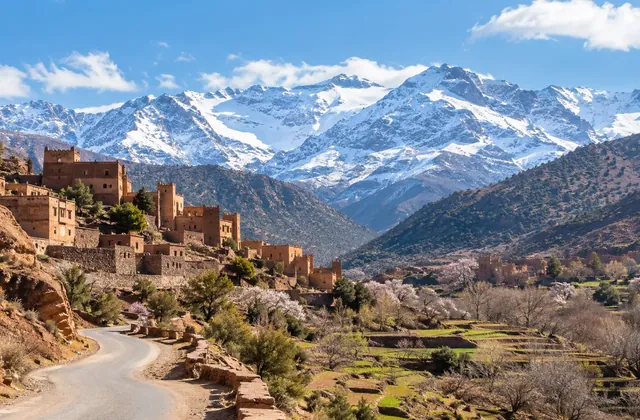
- High Atlas and Anti-Atlas;
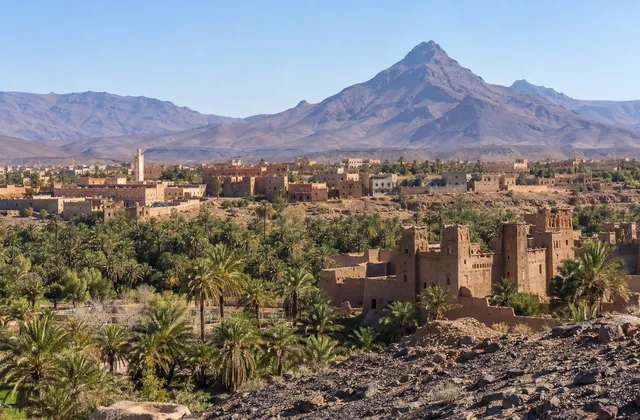
- Dadès valley and Todra gorges;
- Drâa valley;
- Ouarzazate, Zagora and Merzouga.
The Moroccan National Tourist Office also indicates that there are nearly 90 developed campsites spread across the territory, in addition to various private areas and structures accommodating motorhomes.
What is the best time to come by campervan?
For many European motorhome owners, the most attractive period is from autumn to spring .
In winter, the climate can be particularly pleasant on the Atlantic coast and in some southern regions, which explains the significant presence of European motorhomes at this time of year.
However, one should not assume that it is warm everywhere in Morocco during winter. In the Atlas Mountains, the Middle Atlas Mountains, and other high-altitude areas, nights can be cold, and snow can affect certain roads.
In the desert too, the temperature differences between day and night can be significant.
To compare the different regions at this time of year, consult our guide Where to go in Morocco in winter?
How much time should I allow?
If you are coming from France, Belgium, the Netherlands or another part of Europe, the journey to Morocco already represents a significant distance.
A stay of just a few days would therefore be of little interest with one's own camper van.
Three or four weeks is enough to create an interesting first itinerary. With one or two months , it becomes possible to travel much more slowly and spend several days in the regions that interest you.
Some motorhome owners even spend a large part of the winter in Morocco, but a long stay requires careful consideration of the permitted duration for the person and the customs rules applicable to the vehicle.
How long can a tourist stay in Morocco?
For foreign nationals exempt from visa requirements, tourist stays are normally limited to three months .
If you wish to stay longer, the mere presence of your campervan does not automatically grant you permission to extend your stay. You must submit an application to the relevant Moroccan authorities before the expiry of your authorized period.
This question is particularly important for motorhome owners who wish to spend the entire winter on site.
How to get to Morocco by campervan?
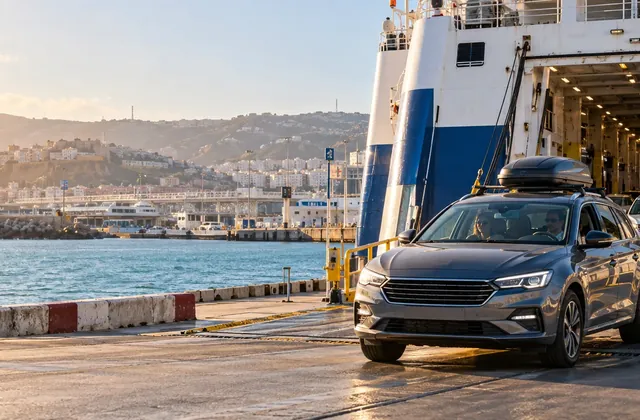
The majority of motorhome owners coming from Europe travel down to the south of Spain and then board a ferry.
The Algeciras – Tangier Med connection is particularly convenient: it operates daily and the crossing takes about an hour and a half.
There are also longer crossings to Tangier Med from, among other places , Barcelona, Sète, Marseille and Genoa .
Departing directly from France avoids the long crossing of Spain but involves more time spent on board and a generally more expensive ticket.
The best choice therefore depends on your starting city, fuel prices, tolls, and the time you have available.
Do you need to book the ferry in advance with a campervan?
This is highly recommended, particularly during peak periods.
When booking, please specify the exact dimensions of the vehicle :
- length ;
- height ;
- number of axles;
- possible presence of a trailer;
- bike racks or other equipment increasing the length.
A camper van obviously does not occupy the same space in the ship's garage as a regular car.
At Tanger Med, passengers with vehicles follow a specific route for police and customs checks.
How long before the ferry should you arrive?
With a motorhome, allow a comfortable margin.
Tanger Med currently advises passengers with vehicles to arrive well in advance and specifically indicates a check-in deadline of two hours before departure for Algeciras . For some long-haul routes such as Sète, Marseille, or Genoa, the required timeframe is even longer.
During peak periods, it is best never to plan your route with the intention of arriving at the port at the last minute.
What documents should I bring?
Prepare the originals of important documents before departure:
- valid passport;
- driving license ;
- motorhome registration certificate;
- proof of insurance covering Morocco;
- support documents;
- owner's permission if the vehicle is not registered in your name.
Also keep separate digital or paper copies of the originals.
The general formalities are detailed in our guide Driving in Morocco with your own car: ferry, formalities and roads .
Does the motorhome need to be declared to customs?
Yes. A vehicle registered abroad that temporarily enters Morocco is placed under the temporary admission regime.
The motorhome therefore remains a foreign vehicle intended to leave the territory at the end of the stay.
Customs procedures have changed, and not all information available online is up-to-date. Some older guides still systematically refer to form D16ter, even though vehicle handling is now largely computerized at customs.
Before a long stay, however, check the formalities in force with Moroccan customs or the port used, because the rules concerning the duration of admission of the vehicle should not be confused with the duration of stay authorized for travelers.
Be careful not to confuse the traveler's stay with the vehicle's stay.
This is particularly important for retirees who wish to stay for several months.
The fact that the vehicle benefits from a temporary admission customs regime does not automatically mean that its owner can personally remain in Morocco for the same period without further formalities.
For a citizen exempt from visa requirements, ordinary tourist stays are limited to three months. Beyond that, the necessary procedures must be completed with the relevant authorities.
Therefore, do not build a four, five or six month trip solely on the basis of vehicle-related information.
Does motorhome insurance have to explicitly cover Morocco?
Yes. Before leaving, contact your insurer and check that Morocco is included in the territorial coverage .
Also check the assistance coverage, as a contract may cover civil liability while providing different conditions for breakdown assistance and repatriation outside of Europe.
Specifically, ask:
- if towing is covered;
- up to what distance;
- if the repatriation of the motorhome is covered;
- if the occupants receive assistance;
- if damage to the slopes is covered;
- if a trailer or a transported scooter is also insured.
At Tanger Med, border insurance is among the services available in the motor zone, but checking your coverage before leaving Europe remains much simpler.
Have the motorhome serviced before leaving
For a journey of several thousand kilometers, a pre-departure check-up is particularly useful.
Specifically check:
- tires and spare wheel;
- tire pressure according to load;
- brakes;
- engine battery;
- levels;
- cooling;
- lighting;
- windshield wipers;
- cell batteries;
- solar installation;
- heating ;
- fridge ;
- water pump.
A small electrical or hydraulic problem that is easy to fix at home becomes much more troublesome once you are living several hundred kilometers away from a major city.
Where to sleep with a campervan in Morocco?
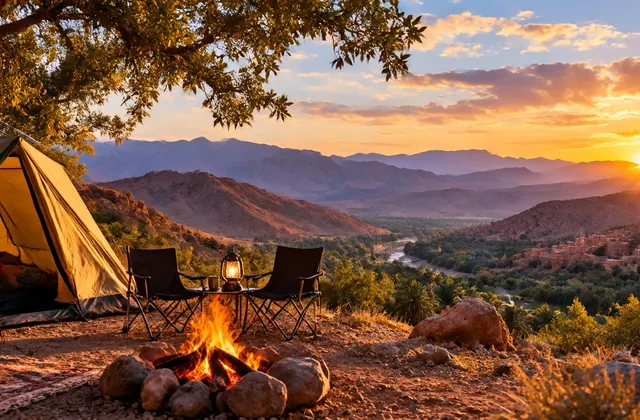
Morocco has many well-equipped campsites , particularly in tourist areas and on routes frequented by motorhome users.
Some simply offer a parking space and sanitary facilities, while others offer:
- electricity;
- water ;
- grey water disposal;
- emptying the toilet;
- showers;
- Wi-Fi;
- restaurant ;
- laundry or additional services.
For a stay of several weeks or months, alternating between equipped campsites and simpler stops makes it easy to manage the vehicle's autonomy.
Is it possible to spend the night outside of campsites?
The situation depends on the location.
There are car parks, areas, private land and other locations where motorhomes are tolerated or welcomed, but this does not mean that one can set up camp freely everywhere.
The rules may vary depending on the municipality, the beach, the natural site or local decisions.
Before spending the night in a location that is not clearly identified as a campsite or rest area, check the signage and ask the local authorities, the parking attendant or the landowner if necessary.
In places where only parking is permitted, avoid turning the space into a real campsite with awning, tables, chairs and equipment set up outside .
Why regularly choose campsites?
Even with a very self-sufficient motorhome, a well-equipped campsite becomes useful every few days.
It allows you to:
- fill up with water;
- drain the tanks properly;
- recharge the batteries if necessary;
- take a more comfortable shower;
- to do laundry;
- leave the vehicle safe during a visit.
For long winter stays, some motorhome owners also stay several days or several weeks in the same place before hitting the road again.
Do you need to book campsites in advance?
Not systematically.
When traveling outside of peak season, it is often possible to arrive directly and request a pitch.
On the other hand, some areas that are very popular with European motorhome users can be much busier during the winter.
If you have identified a specific campsite where you would like to spend several weeks, it is wise to contact them before arriving.
The same logic is explained more broadly in our Morocco guide: should you book your accommodation and excursions in advance?
How to manage water?
Water autonomy is one of the main issues during a long campervan trip.
Campsites are generally the easiest way to refill your fresh water tank. Other supply points may exist, but the water quality is not necessarily the same everywhere.
For drinking water, many travelers prefer to use bottled water or a suitable filtration system.
Always keep a hose reserved for clean water and store it separately from the equipment used for emptying.
Where to empty grey water and toilet waste?
Use the facilities provided for this purpose in campsites and equipped areas.
Grey water from the shower and sink and black water from the toilet should not be emptied just anywhere.
Do not empty the toilet cassette in nature, in a ditch or in a parking lot.
On a long trip, don't wait until your tanks are completely full before looking for a place to empty them. Take advantage of the campsites you regularly pass to top up your fluids and set off again with complete autonomy.
Electricity: Should we be self-sufficient?
A certain degree of electrical autonomy is very practical in Morocco.
A motorhome equipped with solar panels and a battery in good condition can operate for several days without being plugged in, particularly when the sunshine is favorable.
Campsites often offer an electrical connection, but the available power is not necessarily the same as that found in a European campsite.
Therefore, avoid assuming that you can systematically use several high-consumption devices simultaneously.
Also bring along the adapters and extension cords you normally use when travelling.
And what about gas?
The question deserves to be prepared before departure, especially for a stay of several months.
The bottle systems, fittings and filling options are not necessarily the same as those used in your country.
So don't leave with just one almost empty bottle assuming you'll find exactly the same model everywhere.
For a long winter stay, check the compatibility of your equipment before departure and ensure sufficient autonomy for heating, hot water, cooking and possibly the refrigerator.
Do we need heating in winter?
Yes, it's better to have it.
Even when the days are mild on the coast, the nights can become cool. In mountainous regions and in the desert, nighttime temperatures can drop much lower.
A campervan trip to Morocco in January does not mean living in shorts for three months without ever using the heating.
If your itinerary includes the Atlas or Middle Atlas mountains, also pack appropriate clothing and monitor the weather conditions.
Internet in a motorhome
A mobile connection is particularly useful when travelling on the go.
It allows you to find a campsite, check the weather, verify a route, contact an establishment and use navigation.
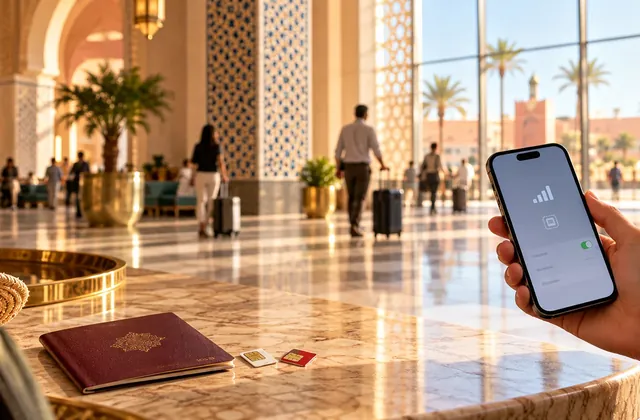
For a long stay, a Moroccan SIM or eSIM is often more suitable than a European roaming plan with limited data.
Before you even arrive, disable data roaming on your European line if your plan does not cover Morocco.
Our guide "Telephone and Internet in Morocco: European SIM, Moroccan card or eSIM?" compares the different solutions.
Plan for species
Credit cards work in many shops and gas stations, but cash remains particularly useful when travelling in a motorhome.
They can be used for:
- small campsites;
- guarded parking lots;
- markets;
- small businesses;
- restaurants;
- local services;
- some gas stations.
Therefore, always keep a reserve of dirhams without carrying your entire budget in cash.
Find advice on withdrawals and currency exchange in Money in Morocco: cash, bank card, currency exchange and ATMs — how to pay?
Are motorways suitable for motorhomes?
Yes. Moroccan highways provide a comfortable way to quickly connect several major regions of the country.
Motorhomes, however, generally pay more than a regular car because the rate depends on the size and the number of axles .
The Moroccan motorway network currently distinguishes between:
- class 1 : two-axle vehicle whose height at the front axle is less than or equal to 1.30 m;
- class 2 : two-axle vehicle exceeding 1.30 m at this location;
- class 3 : vehicle or combination of vehicles with more than two axles and more than 1.30 m.
Many two-axle motorhomes therefore fall under class 2, but it is the actual size of the vehicle that determines the category applied.
Does a trailer change the toll rate?
It can change the vehicle category since the number of axles in the vehicle is one of the criteria used by Autoroutes du Maroc.
If you are towing a trailer with a car, motorcycle or equipment, then take this cost into account in your motorway budget.
Updated rates are available on the Moroccan Autoroutes network.
Should we take the highways or the national roads?
Both are useful.
The motorway saves a lot of time when you need to quickly reach a distant region, for example between Tangier, Rabat, Casablanca, Marrakech or Agadir.
National roads, on the other hand, allow you to discover more villages and landscapes.
A motorhome trip lends itself particularly well to a combination of the two: motorway for long transitions, secondary roads when discovering the route is part of the trip.
Be careful of the size restrictions in cities
A motorhome is not a car.
Avoid blindly following a GPS in historic centers and medinas. A street marked as accessible may become too narrow for your width, height, or overhang.
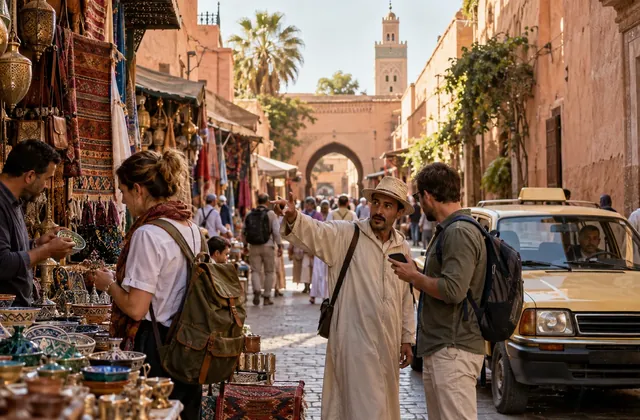
To visit Marrakech, Fez, Essaouira or other historical cities, it is often much simpler to leave the campervan in a campsite or suitable parking lot and then continue on foot or by taxi.
Our guide Taxis in Morocco: small taxi, grand taxi, applications and fares can then be useful.
Also pay attention to the height
Know the exact total height of your motorhome, taking into account the equipment installed on the roof:
- air conditioning;
- antenna;
- skylights;
- solar panels;
- chests or other equipment.
Record this height in a location visible from the driver's seat if necessary.
Covered car parks, low branches, petrol station canopies and urban crossings require more attention than with a car.
Are the roads in the Atlas Mountains accessible by campervan?
Major paved roads can be travelled by many motorhomes, but the size changes the experience.
A narrow road, tight turns or crossing with a truck require more anticipation with a seven-meter vehicle than with a small car.
Before a mountain stage:
- check the road conditions;
- check the weather;
- avoid driving at night;
- plan for sufficient fuel;
- Do not overestimate the average speed.
After heavy rain or during a cold period, conditions can change rapidly in some areas.
Do I need a 4x4 motorhome?
Not for a standard circuit.
Most of Morocco's major destinations are accessible by paved roads: Marrakech, Ouarzazate, Boumalne Dadès, Tinghir, Zagora or Merzouga can be included in a road trip itinerary without owning an all-terrain vehicle.
A classic motorhome, on the other hand, is not designed to take on every track simply because they appear on a navigation application.
Weight, overhang, ground clearance and tires must be taken into account.
Do not blindly follow navigation apps
An app can suggest the theoretically shortest route without taking into account that you are driving a large motorhome.
Before choosing an unknown secondary road, look at its type, its terrain and the recent comments available.
If a road seems clearly unsuitable, it is better to take a detour than to continue until you can no longer turn around.
Is it possible to reach the Merzouga dunes in a campervan?
Yes, it is possible to reach the Merzouga region by paved road.
However, this does not mean that you should then drive your camper van in the sand or on the tracks around the dunes.
The simplest option is to park in a campsite or suitable accommodation and then continue the excursion by 4x4 or with a local provider .
To choose your desert experience, consult Sleeping in the desert in Morocco: bivouac, camp or hostel?
Which routes are particularly suitable for motorhomes?
There are many possibilities.
For a first trip, you could, for example, create an itinerary including:
- Tangier or Chefchaouen;
- Rabat;
- Essaouira;
- Agadir;
- Anti-Atlas;
- Ouarzazate;
- Dadès valley;
- Tinghir;
- Merzouga;
- then return via Marrakech or the imperial cities.
Obviously, it is not necessary to include everything in the same stay.
In a motorhome, overly busy itineraries are of little interest: the freedom to stay several days in a pleasant place is precisely part of the journey.
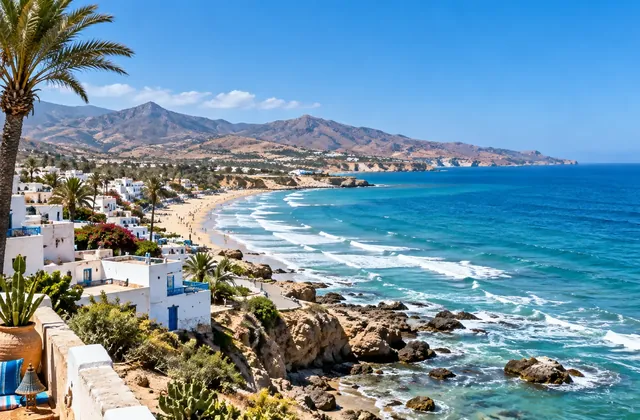
The Atlantic coast by motorhome
The Atlantic coast is a particularly natural route for motorhomes.
Essaouira, the coastal villages, Agadir, Mirleft and Sidi Ifni allow you to alternate between beaches, small towns and longer stops.
In winter, this part of Morocco is particularly attractive to travellers seeking milder temperatures.
To prepare for this region, consult our 7-day road trip guide on the Moroccan Atlantic coast . Naturally, it's possible to travel the same route much more slowly by campervan.
The Anti-Atlas Mountains: particularly interesting for motorhomes
The regions around Taroudant, Tafraoute and the valleys of the Anti-Atlas offer another face of Morocco.
For a motorhome owner with several weeks available, they allow you to get off the beaten tourist track and discover villages, mountains and palm groves at a slower pace.
However, the roads require more attention due to the terrain and the size of the vehicle.
How many kilometers should I plan to drive per day?
It is better to think in terms of time rather than kilometers.
Two hundred kilometers of highway and two hundred kilometers of mountain roads obviously do not represent the same day.
With a motorhome, stops are also more frequent: fuel, shopping, views, meals and searching for a place to spend the night.
Regularly planning days with only 100 to 200 km , or even no driving at all, allows you to enjoy the trip much more.
Fuel: Is it easy to fill up?
Yes. There are many petrol stations on major roads and in cities.
In more remote areas, simply adopt the usual rule for long road trips: don't wait until you're almost empty before looking for a gas station.
Since a motorhome consumes more fuel than a car, allow a comfortable margin before a long journey in the South or in the mountains.
Shopping in Morocco by campervan
Supermarkets, local shops, markets and souks make it easy to stock up on supplies during the trip.
One of the advantages of a motorhome is precisely the ability to gradually buy fruit, vegetables, bread and other local products rather than filling the cupboards for several weeks before leaving.
In small towns, keep some dirhams in cash for purchases in shops and markets.
Parking during a visit
In large cities, look for a parking lot suitable for the size of the motorhome before arriving in the city centre.
A guarded parking lot can be particularly useful if you are leaving the vehicle for several hours.
Avoid leaving the following visible:
- computer ;
- camera ;
- passports;
- money ;
- phone ;
- bags easily accessible.
A campsite also allows you to leave your vehicle in a designated spot before visiting the city by taxi.
Traveling with a scooter, a motorcycle or bicycles
Many motorhome owners carry a two-wheeler to avoid moving the vehicle for every errand or visit.
This is particularly useful when the campsite is far from the centre.
However, please check:
- the maximum load of the motorcycle or bicycle carrier;
- the total weight of the vehicle;
- two-wheeler insurance;
- the necessary documents if it is registered;
- the total length if the system protrudes significantly at the rear.
A registered scooter or motorcycle may also be subject to customs formalities upon entry into Morocco.
Pay attention to the weight of the motorhome
Long journeys easily lead to carrying too much equipment.
Water, gas bottles, food, bicycles, scooters, extra panels and equipment can quickly increase the actual mass of the vehicle.
Before setting off, check your GVWR and the available payload .
This precaution is important for safety, tires, braking and vehicle compliance throughout the entire European and Moroccan journey.
Should we avoid driving at night?
When possible, yes, especially on secondary roads.
Pedestrians, cyclists, animals, and poorly visible vehicles may be present on the road. Given the weight and braking distance of a motorhome, anticipation is even more crucial.
On a journey lasting several weeks, there is generally no reason to turn a stage into a race against the clock.
Choose your overnight location early enough and resume your journey the next day.
Motorhome and Ramadan
Traveling by campervan during Ramadan does not pose any particular difficulty and the vehicle's autonomy even simplifies the organization of meals during the day.
The pace of towns and businesses changes around iftar, however, and some campsites or services may adjust their hours.
Find out more about the specifics of this period in our guide Travelling to Morocco during Ramadan: what changes for a tourist?
How much does a trip to Morocco in a campervan cost?
The budget depends heavily on the starting point and the pace of the trip.
The main expenses are generally:
- fuel to reach Morocco and travel there;
- ferry;
- tolls in Europe and Morocco;
- campsites and rest areas;
- food ;
- restaurants and sightseeing;
- insurance and assistance;
- Possible vehicle maintenance.
A longer stay can reduce the average daily cost since the ferry and the journey from Europe are amortized over several weeks.
For other travel expenses, see What budget should I plan for a trip to Morocco?
The main mistakes to avoid
- Confusing the vehicle's admission period with the traveler's authorized length of stay.
- Leaving without checking that the insurance covers Morocco.
- Do not check the conditions for repatriating the motorhome.
- Booking the ferry with incorrect vehicle dimensions.
- Blindly following a GPS in a medina or on a small road.
- Entering a track not suitable for the weight and overhang of the vehicle.
- Emptying wastewater outside of a designated location.
- Settling in for the night without checking that parking is permitted.
- Wait until the tanks are empty or full before looking for a campsite.
- Going to the mountains in winter without checking the weather.
- Driving unnecessarily at night on secondary roads.
- Overloading the vehicle for a stay of several months.
For other situations to be aware of before the trip, also see The pitfalls to avoid in Morocco: tips for traveling with peace of mind .
The checklist before setting off in a motorhome in Morocco
- Valid passports.
- Driving license.
- Original registration certificate.
- Insurance covering Morocco.
- Assistance and repatriation of the motorhome verified.
- Documents for a possible scooter or trailer.
- Ferry booked with the exact dimensions.
- Tires, brakes and fluid levels checked.
- Cell batteries in good condition.
- Solar installation verified.
- Functional heating for a winter trip.
- Gas autonomy verified.
- Water pipe and fittings.
- Drainage equipment.
- The exact height and length of the vehicle are known.
- Offline maps downloaded.
- Data roaming is disabled if the European plan does not cover Morocco.
- A few dirhams available for initial expenses.
Is Morocco a good destination for a campervan trip?
For a traveler who enjoys traveling around, Morocco is particularly well suited to motorhomes.
The distances allow you to travel in a few days from the ocean to the mountains and then to the pre-Saharan landscapes, while the network of campsites and the many services found on the major routes facilitate long stays.
The motorhome allows you to enjoy Morocco without trying to cover the maximum number of kilometers: staying several days near the ocean, stopping in a valley or changing your itinerary according to the weather is part of the appeal of the trip.
With the formalities, insurance and vehicle autonomy checked before departure, it becomes possible to devote the bulk of the stay to what the motorhome is made for: taking your time and choosing each day the next stage .