Morocco is generally a welcoming destination where the vast majority of travelers encounter no particular problems. Shopkeepers, restaurant owners, accommodation providers, drivers, and residents are generally honest and accustomed to receiving visitors.
As in all popular tourist destinations, certain situations can lead to unexpected expenses, excessive prices, or simply an unpleasant experience. Knowing about these in advance makes it easy to avoid them, without spending your entire trip being suspicious of everyone.
By car: strictly adhere to speed limits
Driving remains one of the best ways to discover Morocco, especially for reaching the Atlas Mountains, the southern valleys, the desert, or parts of the coast. But you have to forget the idea that a long, open road necessarily means you can drive fast.
Speed checks are frequent, and Morocco has fixed and mobile speed cameras as well as automated enforcement systems. Particular attention should be paid entering and leaving built-up areas: speed limits can decrease rapidly even when the road appears clear.
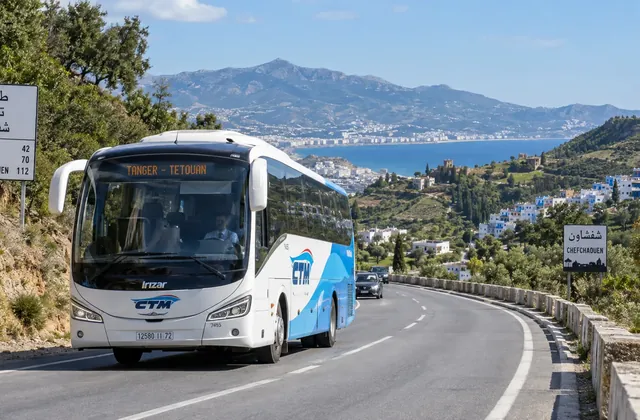
In the north of the country, particularly around Tangier, Tetouan, Chefchaouen and along the Rif roads, it is especially important to pay attention to signs and changes in speed limits. Roadside checks are common there.
On motorways, the maximum speed is generally 120 km/h, but lower limits may be imposed near toll plazas, roadworks, or certain specific areas. On other roads, local signage should always take precedence over the driver's usual driving habits.
The best advice is simple: respect the posted speed limit even when other vehicles are driving faster. This avoids fines and also allows you to better anticipate pedestrians, mopeds, animals, or slow-moving vehicles that you might encounter on some roads.
Police roadblocks and checkpoints are not necessarily a problem
It is common to encounter police or gendarmerie checkpoints at the entrances to towns and on certain major roads. For a foreign traveler, their number can be surprising.
It's usually enough to slow down, follow the officer's instructions, and keep your driver's license, vehicle registration, and insurance documents close at hand. A traffic stop doesn't necessarily mean an infraction has been committed.
Taxis: meter or price quoted before departure
Small taxis are convenient and inexpensive in Moroccan cities. Most rides go smoothly, but haggling over the fare upon arrival is always unpleasant.
When the taxi has a meter, simply check that it is being used. If the fare needs to be negotiated, especially with some large taxis or for a specific trip, agree on the price before setting off.
In airports, train stations and very touristy places, favour clearly identified taxis and official stations as much as possible.
Restaurants and cafes: check prices before ordering
You can generally eat very well in Morocco for a reasonable price, and most establishments display or advertise their prices clearly. However, in the most touristy areas, it can happen that a visitor orders without knowing the exact price and discovers a bill much higher than expected.
When a menu doesn't list prices, simply ask for them before ordering. This is especially useful for fish sold by weight, seafood platters, certain meats, or meals offered directly without a menu.
It can also be helpful to ask if side dishes, bread, salads or drinks are included in the advertised price.
However, this doesn't mean that a restaurant is trying to overcharge tourists. Such situations are rare. Calmly checking prices is usually enough to avoid any misunderstandings.
Fake guides in the medinas
In busy medinas, some people may spontaneously present themselves as guides, offer to show a monument or claim that it is difficult to find one's way without help.
The problem isn't always the price of the tour. Some unlicensed guides primarily direct travelers to shops, cooperatives, herbalists, or businesses with which they work and where they receive a commission on purchases.
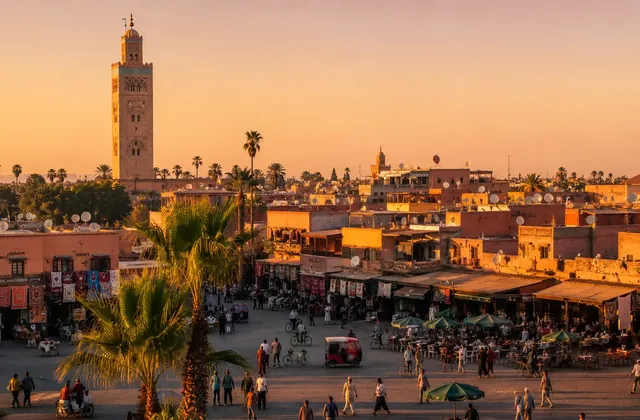
The phenomenon is particularly well known in large tourist medinas, especially in Marrakech, but can also be found in Fez and several northern cities.
If you really want to visit a medina with a guide, opt for an identifiable official guide or a service booked through accommodation, a recognized agency or a tourist office.
"Come and see, you don't have to buy anything."
Entering a shop is part of the pleasure of a trip to Morocco. Souks, artisan workshops, and markets are among the most interesting places to discover.
However, sometimes a simple visit advertised as free turns into a long presentation of carpets, leather, spices, argan oil or handicrafts with progressive pressure to buy.
You are under no obligation to buy anything. If a product doesn't interest you, a polite but clear refusal is sufficient. If you do wish to buy, take the time to compare prices and don't consider the lowest advertised price as the absolute standard.
Beware of hidden commissions
A driver, a guide, or someone you meet on the street might recommend "the best shop," "the real cooperative," or "the place where Moroccans shop." The recommendation might be excellent, but it could also result in a commission paid by the merchant.
This commission is naturally included in the final price. This doesn't necessarily mean the product is bad or the business is dishonest, but it's worth keeping in mind that the recommendation isn't always entirely unbiased.
Excursions, desert trips, 4x4 and quad biking: check what is actually included
An excursion advertised at an attractive price may cover very different services. Before booking, ask precisely what is included.
- Round-trip transportation.
- Meals and drinks.
- Possible entries.
- Guide.
- Actual duration of the activity.
- Transfer by 4x4.
- Camel ride or other advertised activity.
- Type of accommodation or camp in the desert.
In the Sahara, for example, two offers presented as a "night in the desert" can correspond to very different experiences: camp directly accessible, transfer by 4x4, camel ride, dinner included or not, private or shared sanitary facilities.
Therefore, comparing only the price without comparing the content of the service can be misleading.
Car rental: photograph the vehicle at the start
Before leaving a rental agency, take a few minutes to photograph or film the entire vehicle: bodywork, bumpers, rims, windshield and interior.
Also check the fuel level indicated on the contract and the return conditions. This very simple precaution avoids disputes regarding scratches or damage that were already present before the rental.
For tracks or unpaved roads, also check that the rental agreement and insurance actually allow this type of use.
Parking: ask for the rate before leaving the car
In some cities and tourist areas, parking attendants offer to watch over parked vehicles. The system generally works without difficulty, but the pricing can sometimes be unclear.
When nothing is clearly displayed, asking for the price when parking prevents an unexpected amount from being charged when leaving.
Purchasing and negotiation: knowing when to stop
Bargaining is part of the custom in many souks and traditional shops, but it should not become a source of stress.
If you're not happy with the final price, you can simply say goodbye and leave. Conversely, when a price has been negotiated at length and agreed upon by both parties, it's best to stick to the agreement.
For a major purchase, especially rugs, jewelry or items presented as antique, take the time to compare several stores before deciding.
Credit card and cash: check the amount before confirming.
Credit cards are now accepted in many hotels, restaurants and shops, but cash remains widely used in Morocco.
Before confirming a card payment, simply check the amount displayed on the terminal and the currency used. For small purchases, taxis, markets, or local establishments, having low-denomination bills is often more practical.
In the medinas: beware of overly insistent directions
Getting lost for a few minutes in a medina is almost part of the journey. Locals very often give directions without asking for anything in return.
However, it can happen that someone spontaneously claims a street is closed, that your destination is in the opposite direction, or that they want to give you a ride. If the situation seems odd, simply check your route on your phone or ask a local shopkeeper for confirmation.
Accepting help from someone is not a problem, but it is best to know from the outset whether it is a free service or a service for which payment will later be expected.
Do not turn caution into permanent mistrust
The main pitfall would ultimately be to spend your entire trip thinking that every person who talks to you is trying to sell you something.
Moroccan hospitality is genuine, and most encounters, restaurants, accommodations, shops, and services proceed perfectly normally. The situations described in this guide mainly concern areas with high tourist traffic.
A few simple steps are all it takes: ask for a price before a service, check what is included, strictly respect speed limits, choose an official guide when you want to be accompanied and never feel obligated to buy.
With these simple precautions, all that remains is to enjoy the trip.