Northern Morocco has a very different identity from Marrakech, the southern valleys, or the Sahara. Here, the Atlantic Ocean meets the Mediterranean, the Rif Mountains tower over the cities, and the medinas blend Moroccan, Andalusian, and Mediterranean influences.
An itinerary between Tangier, Tetouan, Chefchaouen and Asilah allows you to discover this diversity in a week without imposing very long stages.
Day 1: Discover Tangier
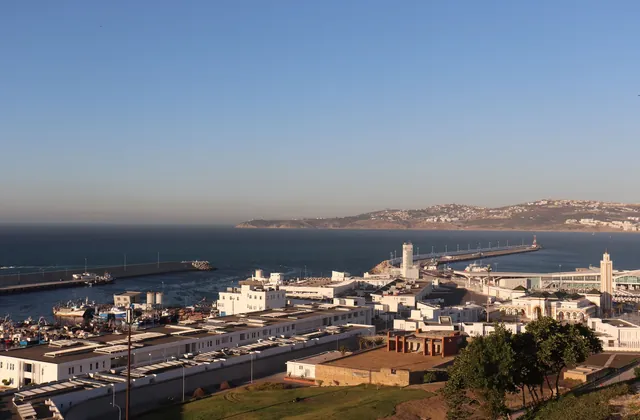
Start your journey in Tangier , the main gateway to northern Morocco. Its location between the Atlantic and the Mediterranean gives it a very special atmosphere.
Dedicate this first day to the medina, the alleyways of the kasbah and the various viewpoints overlooking the city and the strait.
Tangier deserves to be discovered at a leisurely pace, alternating between historic districts, cafes, walks and sea views.
Day 2: Tangier between sea and history
Set aside a second day to explore the area around Tangier and enjoy more of its coastline.
The city is not limited to its medina. Its more modern districts, its promenades facing the sea and the coastal landscapes allow us to understand its role as a crossroads between several cultures.
This second night also avoids turning Tangier into a mere arrival point before immediately leaving for another destination.
Day 3: From Tangier to Tetouan
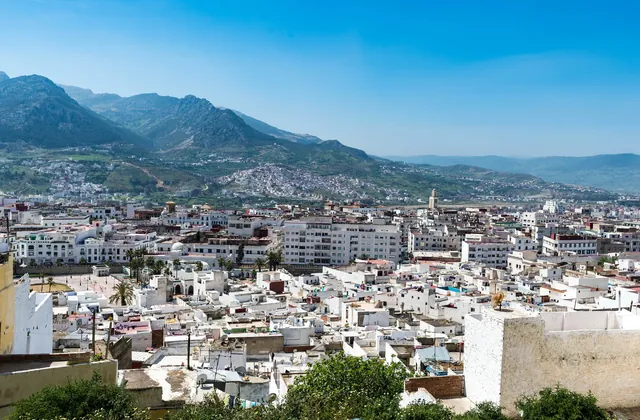
Then head to Tetouan , located between the Rif mountains and the Mediterranean Sea.
Its medina has a different atmosphere from that of Tangier. More compact and very lively, it preserves an important architectural and artisanal heritage.
Take the time to walk without a rigid itinerary in order to discover the alleyways, markets and different squares of the city.
Tetouan and its Andalusian heritage
Tetouan's identity has been profoundly marked by exchanges with Andalusia and the Mediterranean basin.
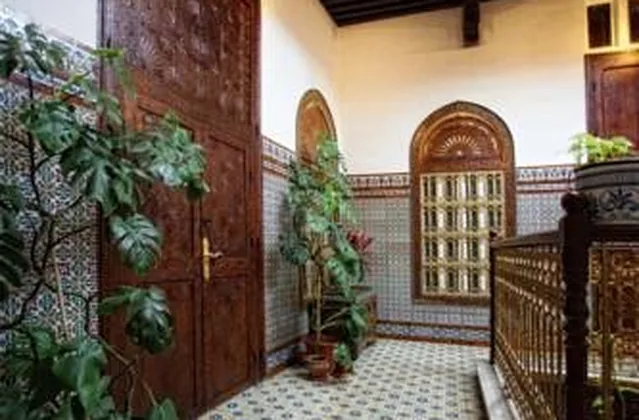
This influence can be seen particularly in the architecture, traditional houses, crafts and some decorations of the medina.
The city is therefore a particularly interesting stop for those who wish to discover a Morocco different from the major tourist circuits of the center and the south.
Day 4: Tetouan and the Mediterranean coast
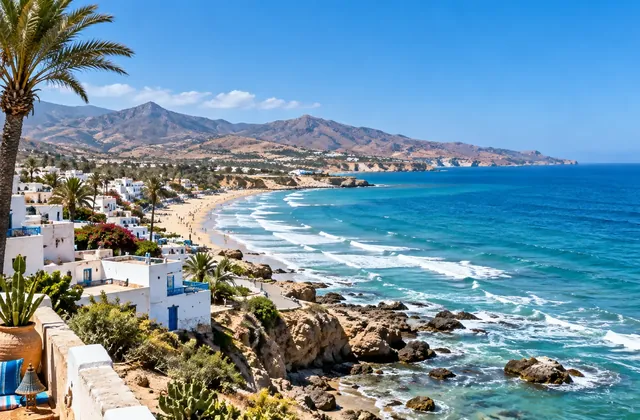
Before heading inland, take advantage of this day to explore the area around Tetouan and the Mediterranean coast .
Depending on the season, it is possible to dedicate part of the day to the sea, the beaches or simply the coastal landscapes.
This stage provides a real respite from the circuit before reaching the Rif mountains.
Day 5: Heading to Chefchaouen
Continue on to Chefchaouen , located in the heart of the Rif mountains.
The city is immediately recognizable by its blue and white facades, narrow streets and mountainous surroundings.
Rather than trying to quickly visit the main places, take the time to wander through the medina and enjoy its atmosphere.
Chefchaouen beyond its blue streets
Chefchaouen is often summed up by its famous blue facades, but its location at the foot of the mountains is also part of its appeal.
The surrounding area allows you to reach viewpoints and discover a landscape that is much greener and mountainous than in the southern regions of Morocco.
Spending a night there also allows you to enjoy the city when there are fewer day visitors.
Day 6: Chefchaouen and the Rif Mountains
Dedicate a second day to Chefchaouen and its surroundings.
Depending on your preferences, you can stay in the city or plan a walk in the nearby hills.
The Rif region brings a completely different dimension to travel: mountains, vegetation and villages replace the desert landscapes often associated with Morocco.
Day 7: Finish the trip in Asilah
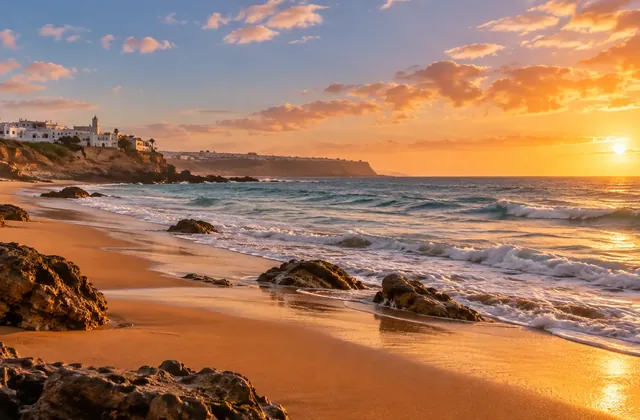
For the final leg, head to Asilah on the Atlantic coast.
This small fortified town offers a more tranquil atmosphere than Tangier. Its white-walled medina, ramparts, and proximity to the ocean make it an excellent end to the trip.
A walk through the medina and then along the ramparts completes the circuit facing the Atlantic.
Why include Asilah?
Asilah brings something different to the other stages.
After the urban intensity of Tangier, the heritage of Tetouan and the mountains of Chefchaouen, the city allows you to rediscover the ocean in a more peaceful atmosphere.
It can also be visited before Tangier if you are doing the route in the opposite direction.
Can this route be done in the opposite direction?
Yes. The route works perfectly in both directions.
You can start with Asilah, continue to Tangier then Tetouan and finish in the mountains at Chefchaouen.
The best order depends mainly on your arrival point and the rest of your trip in Morocco.
Should we rent a car?
A car makes travel easier and allows you to stop freely between different stages, but it is not essential to discover the main cities.
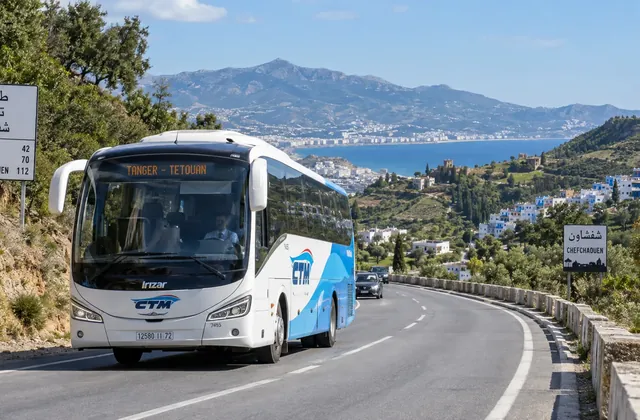
The north has many connections between major centers and it is quite possible to organize the trip by combining public transport and transfers.
However, to explore beaches or mountainous areas more freely, a car provides greater flexibility.
Northern Morocco with children
This itinerary works well for families because the distances between the main stages remain more reasonable than on a grand tour to the Sahara.
Alternating between medinas, beaches and mountains also allows you to vary your days and avoid a succession of urban visits.
With young children, plan for two nights in several stages rather than changing accommodation daily.
Which is the best season?
Spring and autumn are particularly pleasant times to travel around northern Morocco and discover the cities on foot.
Summer is a good time for travellers wishing to enjoy the coast, although some destinations may be more crowded.
Winter brings more coolness and rain than in southern Morocco, especially in mountainous areas.
Northern Morocco in summer
Thanks to its proximity to the Atlantic and the Mediterranean, the north offers an attractive alternative to inland regions during the warmer months.
The trip can then be more oriented towards coastal cities, beaches and seaside evenings.
Chefchaouen allows you to complete your stay with a stop in the mountains.
North or South of Morocco for a first trip?
The two regions offer very different experiences.
Southern Morocco is particularly attractive for its kasbahs, arid valleys, gorges and the Sahara.
The North offers more historic towns close to each other, Mediterranean landscapes, mountains and coastlines.
For a first trip, the choice therefore depends less on the beauty of the regions than on the type of experience sought.
How many days should I plan for?
One week is a good amount of time to discover Tangier, Tetouan, Chefchaouen and Asilah without excessive rushing.
With only four or five days, it's better to select three stages rather than trying to include everything.
With ten days or more, you can add several nights on the coast and explore more of the Rif Mountains.
Where to sleep during this route?
Each city offers a different atmosphere and it is interesting to vary the types of accommodation.
In Tangier and Tetouan, you might want to choose an establishment that allows easy access to the medina.
In Chefchaouen, sleeping in or near the old town allows you to enjoy the atmosphere of the evening and the morning.
In Asilah, accommodation close to the medina or the ocean is particularly suitable for ending the trip.
Another side of Morocco
This tour shows that Morocco is not just about the desert or Marrakech.
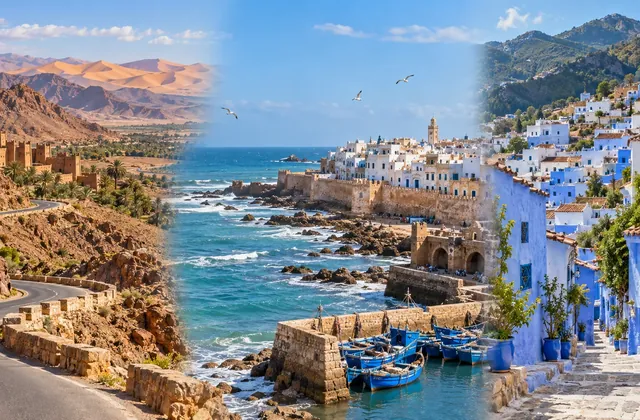
In a few days, you go from a large city open to two seas to an Andalusian medina, then to the Rif mountains before returning to the white ramparts of a small Atlantic town.
For those who already know southern Morocco, the north thus offers the impression of discovering another country.
In summary
Tangier brings history, the energy of a big city and the landscapes of the strait.
Tetouan allows you to discover a medina deeply marked by its Andalusian heritage.
Chefchaouen combines a unique city with the landscapes of the Rif.
Asilah ends the journey in a peaceful atmosphere facing the Atlantic.
Combined into a single itinerary, these four stages allow you to discover in one week one of the most varied faces of Morocco.