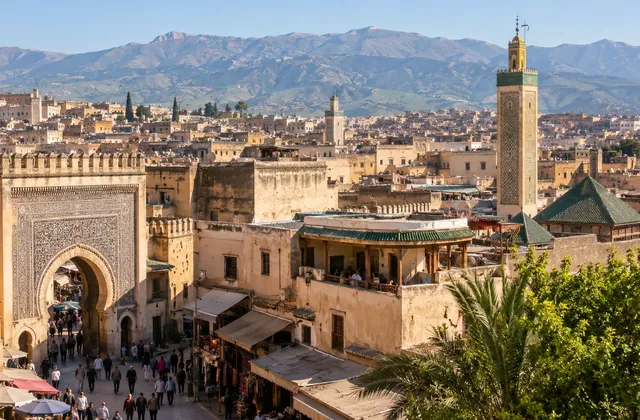
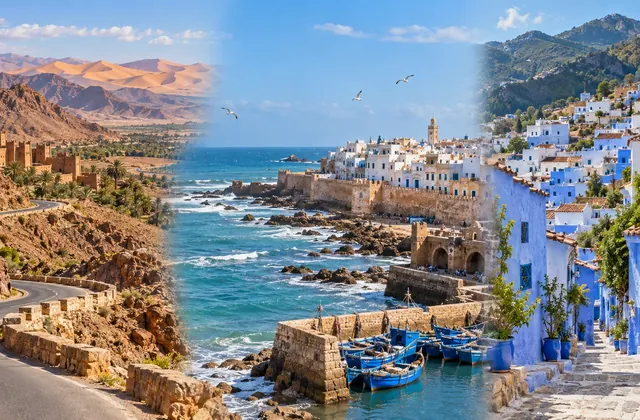
A week is enough to discover many of the iconic landscapes of southern Morocco , provided you plan a balanced itinerary. The goal is not to cover as many kilometers as possible, but to alternate between scenic roads, villages, valleys, gorges, and desert.
This 7-day itinerary between Marrakech and Merzouga crosses the High Atlas, Ouarzazate, the Dadès Valley, Tinghir and the Todra Gorges before reaching the Erg Chebbi dunes.
Day 1: Marrakech and departure for the High Atlas
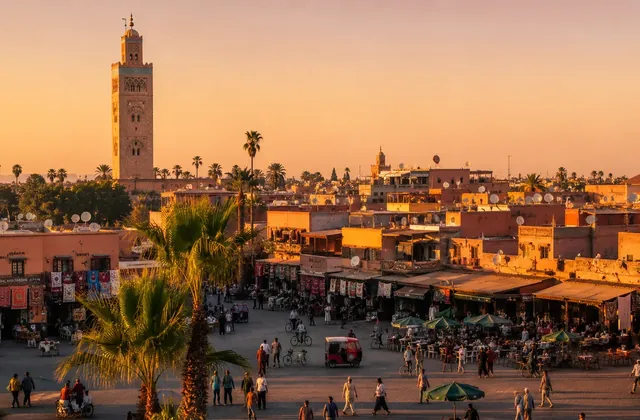
The journey begins in Marrakech . Depending on your arrival time, you can spend part of the day exploring the city before preparing to depart for the south.
If you are already there, leaving in the morning allows you to gradually reach the High Atlas and enjoy the mountain scenery without having to make a very long stage on the first day.
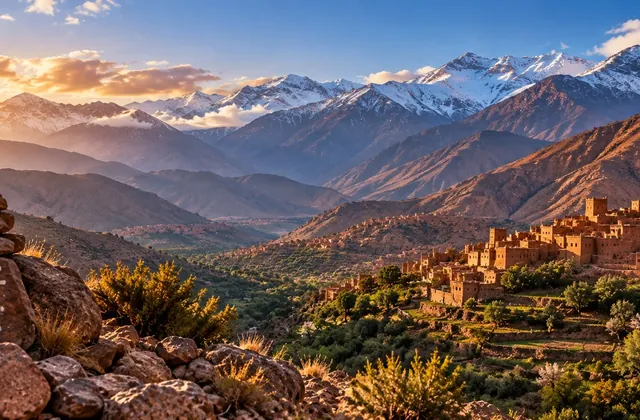
The road passes through villages, mountain passes and mineral landscapes that change rapidly as you leave the Marrakech plain.
Day 2: High Atlas and Ouarzazate
The second day allows us to continue crossing the Atlas Mountains towards Ouarzazate.
The journey is worth making several stops to enjoy the panoramas and villages built into the hillsides. As you approach the southern slope, the landscape becomes drier and the earthen buildings herald the pre-Saharan regions.
Ouarzazate is a convenient stopover before continuing towards the Dadès and Todra valleys.
Day 3: Ouarzazate, Valley of Roses and Dades Valley
From Ouarzazate, head east following the road that crosses the landscapes of southern Morocco.
The road gradually leads towards the Valley of Roses , then Boumalne Dadès. From there, it is possible to travel up the Dadès Valley to discover its villages, kasbahs and rock formations.
Plan to spend a night in the Dadès Valley to take advantage of the late afternoon light and avoid a quick crossing.
Day 4: Dades Gorges, Tinghir and Todra Gorges
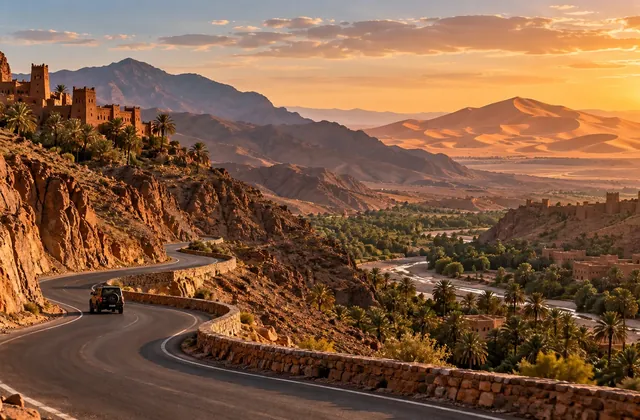
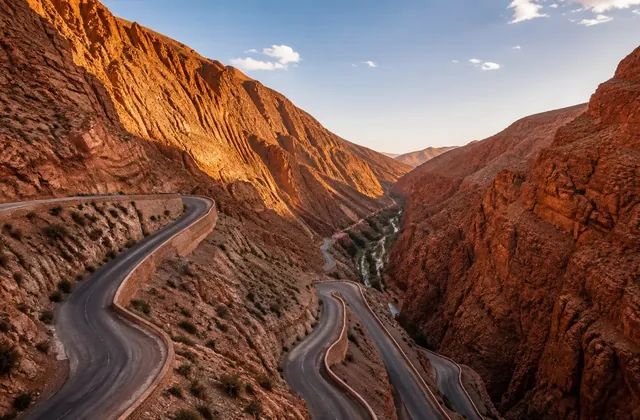
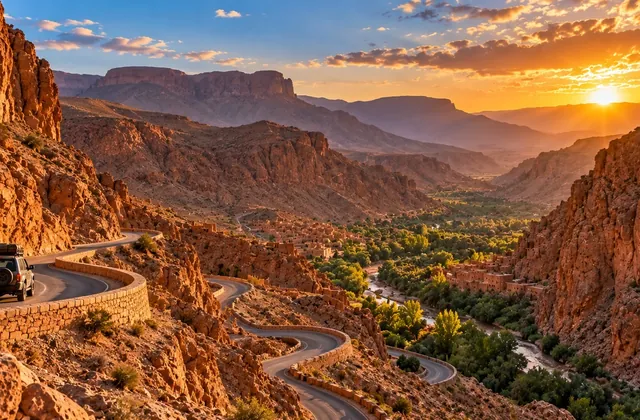
Dedicate the beginning of the day to exploring the Dadès Gorges . The winding road, rock formations, and panoramic views of the valley are among the most famous landscapes in the region.
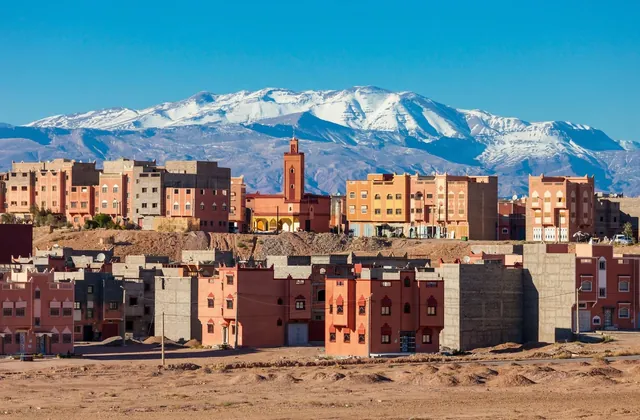
Then continue your journey towards Tinghir . Its palm grove forms a spectacular contrast with the arid landscapes that surround it.
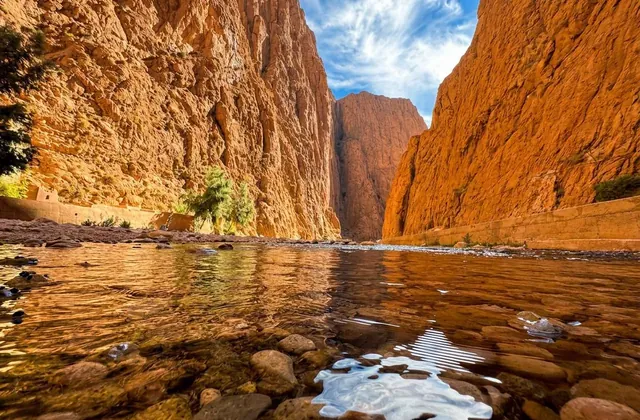
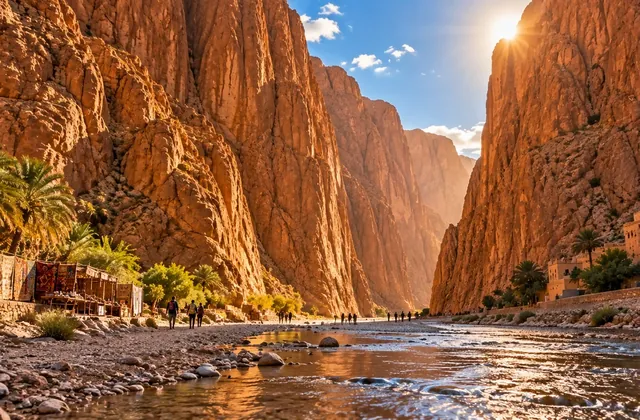
The Todra Gorge is nearby. The passage between the high cliffs can be explored on foot before spending the night in the area.
Day 5: Tinghir to Merzouga
The road gradually leaves the mountainous terrain to reach the more open landscapes of southeastern Morocco.
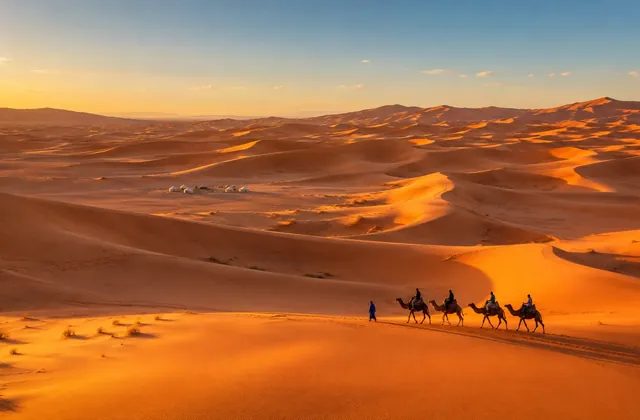
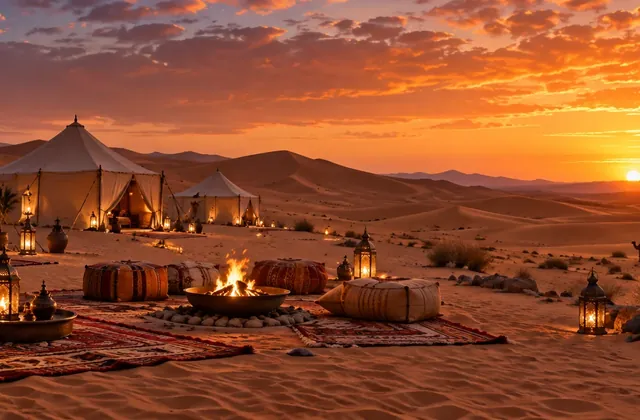
Passing through Erfoud and Rissani, the environment becomes increasingly Saharan. As you approach Merzouga , the dunes of Erg Chebbi appear on the horizon.
Arriving before the end of the afternoon allows you to enjoy the first light on the dunes and to have a real first contact with the Sahara.
Day 6: A day in the Merzouga desert
Set aside a full day to explore the area around Merzouga . It would be a shame to travel all that way only to leave the very next morning.
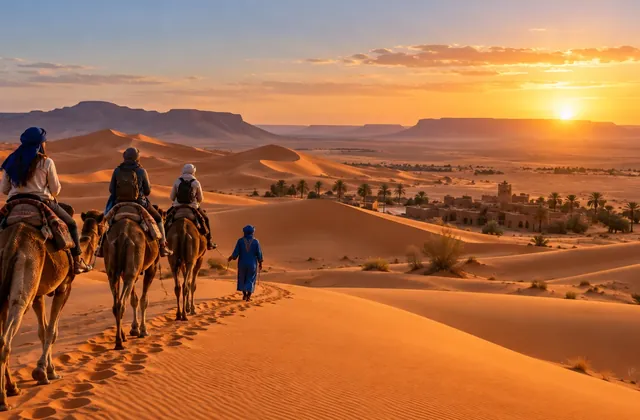
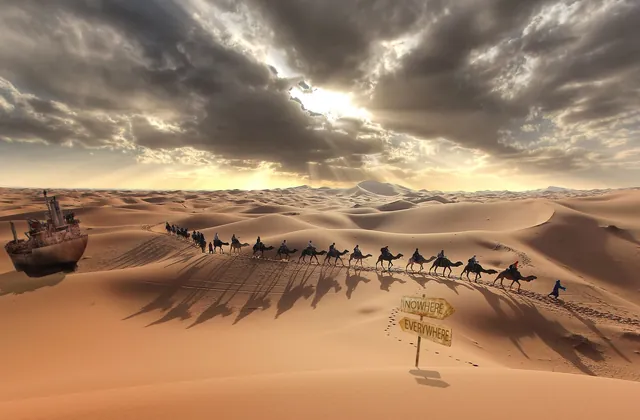
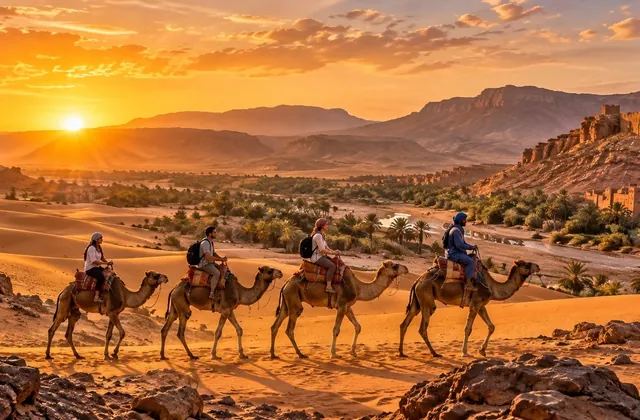
Depending on your preferences, the day can include a 4x4 excursion around Erg Chebbi, a walk in the dunes, exploring the surrounding villages or a camel ride.
Spending a night in a bivouac also allows you to extend the experience and discover the desert after sunset.
Day 7: Last morning in the Sahara
Enjoy the sunrise before leaving Merzouga. The morning offers a very different light from that of the evening and allows you to discover the dunes in a calmer atmosphere.
The rest of the itinerary then depends on your trip: return to Marrakech, continuation to another region of Morocco or an intermediate stop to avoid a very long day of driving.
Is it really necessary to do Marrakech-Merzouga in 7 days?
Seven days is a good amount of time to discover the main stages without turning the trip into a constant race.
The main advantage of this itinerary is that it dedicates a full night to the Dadès Valley, a stop in Tinghir, and two nights around Merzouga. This ensures that the days spent traveling are associated with sightseeing and enjoying the scenery rather than simply transferring.
Can the route be done in the opposite direction?
Yes. It is perfectly possible to start from Merzouga and travel up to Marrakech. The stages remain practically the same, just in reverse order.
The choice depends mainly on your point of arrival in Morocco and the rest of your journey.
With a regular car or a 4x4?
The main route between Marrakech, Ouarzazate, Dadès, Tinghir and Merzouga is via paved roads and does not require an off-road vehicle.
A 4x4 becomes interesting for certain excursions in the desert or for taking tracks off the main route.
If you do not wish to drive on the tracks, it is usually possible to arrange these excursions locally.
Where to stay during this tour?
The choice of accommodation greatly influences the pace of the trip. Sleeping directly in the valleys or near the desert avoids extra travel and allows you to enjoy the landscapes early in the morning and at the end of the day.
For this route, the main stops are Marrakech, Ouarzazate, the Dadès Valley, Tinghir and Merzouga .
Auberges Maroc allows you to search for accommodation at each stage and to build the itinerary progressively according to your budget and the type of stay you are looking for.
What if you have more than 7 days?
With a few extra days, it becomes possible to slow down the pace and add a second night in the Dadès, a hike around Tinghir or more time in the Sahara.
You can also extend the trip to Zagora and M'Hamid, or explore more deeply the regions located between the High Atlas and the desert.